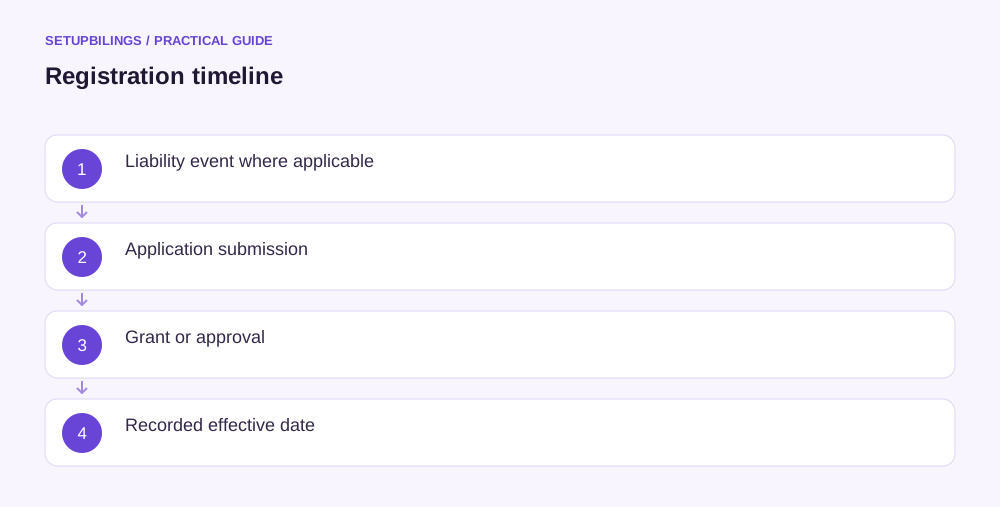
Keep four dates separate
A new registrant should record the date registration liability arose, the application submission date, the grant or approval date and the effective date shown in the registration records. These dates may coincide, but they serve different purposes. The day an accountant forwards the certificate is a fifth administrative event and should not replace any of them.
The effective date matters because it helps identify the period for registered-person records and the treatment of transactions while an application was pending. Begin with the certificate and actual application timeline. Do not assume that every business starts its GST obligations only when it first sees the approved PDF.
Understand the ordinary timely-application rule
Rule 10 provides that registration is effective from the date a person becomes liable where the application is submitted within thirty days of that date. Where the application is submitted after that period, the rule provides for the effective date to be the grant date under the relevant registration process. Read these rules with the actual category and circumstances.
A later certificate effective date does not necessarily erase tax consequences arising from an earlier failure to register. The underlying liability and any period before grant need separate examination. Avoid using a late application as a way to choose when earlier taxable activity becomes relevant to the law.
Voluntary registration also requires its own timeline because there may be no earlier mandatory liability date. Keep the voluntary decision and grant records together. Special registration categories, temporary validity and officer-initiated registration can involve different provisions, so do not force every certificate into one ordinary threshold-crossing example.
Establish the liability date from business facts
For turnover-based registration, retain the running aggregate-turnover calculation and the supplies supporting the point when liability arose. Aggregate turnover is PAN based across India and is not simply bank collections from one shop. An invoice paid late can remain relevant to the earlier supply period; a bank loan does not become sales merely because it arrives near the threshold date.
For compulsory registration or business-transfer situations, the relevant trigger may not be a turnover crossing. Record the business model, agreement or event that creates the issue and the applicable provision or exemption. The liability date should follow a supported analysis, not a date chosen later to match a convenient invoice batch.
Illustratively, a service firm identifies that its applicable registration liability arose on 10 June and submits a valid application within thirty days. If registration is granted on 28 June with effect from 10 June, the accounts team must review the intervening supplies. Beginning the sales file only on 28 June would leave part of the effective period outside its first review.
Review invoices issued while the application was pending
Section 31 contains a revised-invoice provision for the period between the effective registration date and certificate issue, subject to its conditions and time limit. That can matter where the registration takes effect before the certificate is issued. Check the specific legal route and document requirements before making corrections to earlier customer bills.
Keep the original document, any permitted revised document and the link between them. Do not delete the original sales history and issue an unexplained second invoice for the same supply. The customer, collection record and return reporting should be able to trace one underlying transaction through the registration transition.
Review price terms as well as tax documents. If a contract promised a fixed final amount, adding tax after registration can raise a commercial question distinct from the tax liability. Record whether the customer price was tax exclusive or inclusive and use the verified treatment rather than assuming the business may recover any amount from every buyer.
Link opening stock and credit to the right date
Special credit provisions use particular reference dates. Section 18 distinguishes timely mandatory registration from voluntary registration when identifying eligible inputs held in stock and inputs contained in semi-finished or finished goods. The relevant snapshot should therefore be prepared from the applicable provision, not whichever month-end stock figure is easiest to print.
Keep purchase invoices, quantities, stock location and business-use evidence for that snapshot. Do not assume all pre-registration expenses or capital purchases qualify merely because the goods or services were bought before approval. Eligibility, documentary conditions, restrictions and filing requirements need their own review.
In the illustrative firm, an equipment purchase on 3 June and stationery remaining on the relevant stock date should not automatically receive identical treatment. Their nature and applicable credit category differ. A schedule separating inputs, services and capital goods prevents a broad “opening GST credit” entry from concealing unsupported items.
Set up the first reporting period
Prepare sales and purchase registers covering the relevant effective period, including transactions entered before the account was approved. Identify advances, returns, cancellations and supplies through platforms so the first return is based on complete records. Reconcile these to the ledger and payments without treating collections as a substitute for supply analysis.
Check which filing obligations and bank-detail requirements apply to the registration and when they begin. Bank-information timing under Rule 10A is tied to grant and the earlier outward-supply filing event, which is a different timing question from the certificate's effective date. Keep those calendar entries separate to avoid applying the wrong start date.
Preserve a one-page registration timeline with the certificate, application and supporting turnover or event analysis. That document gives future staff a clear explanation of the first GST period and makes later customer corrections or stock-credit reviews far easier to follow.